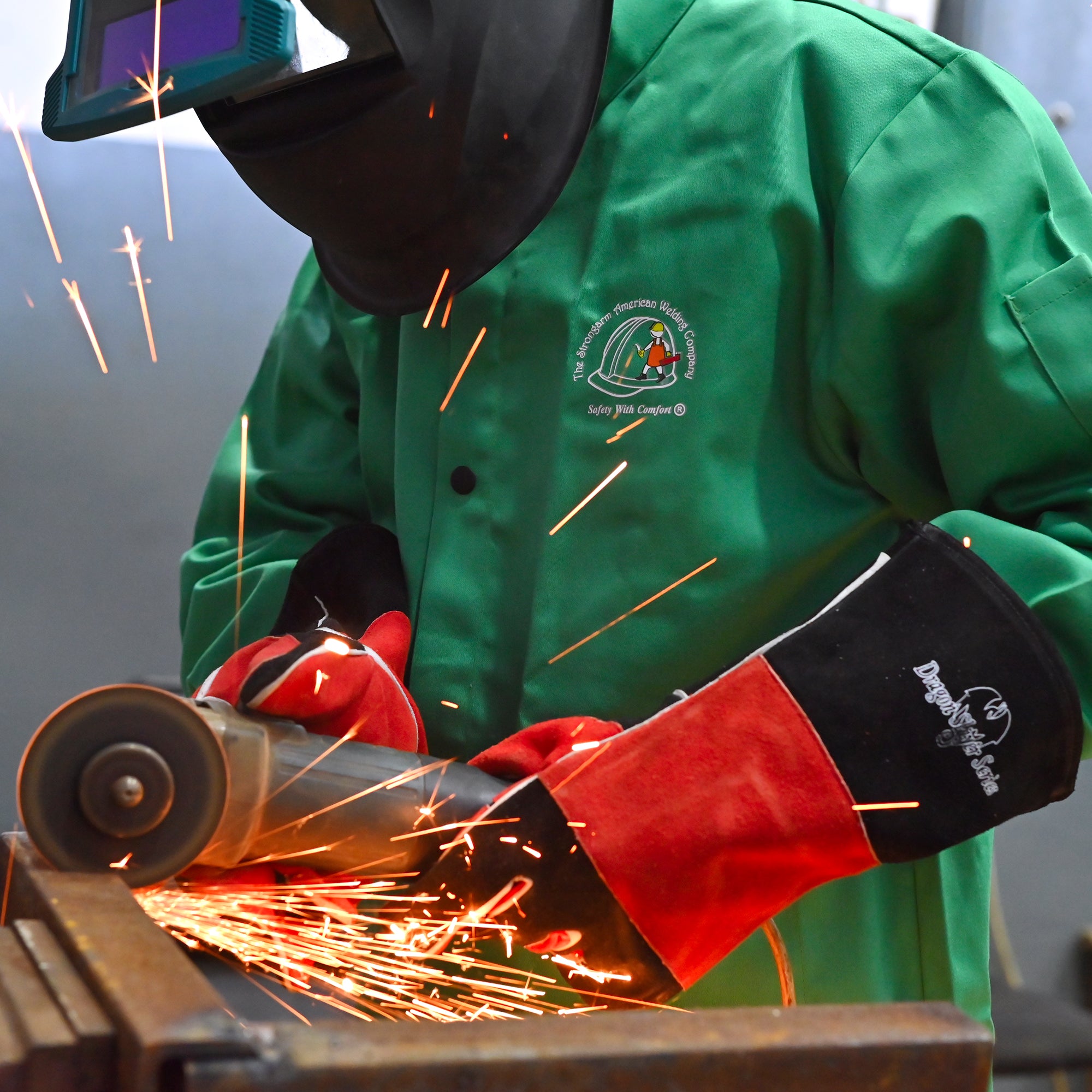
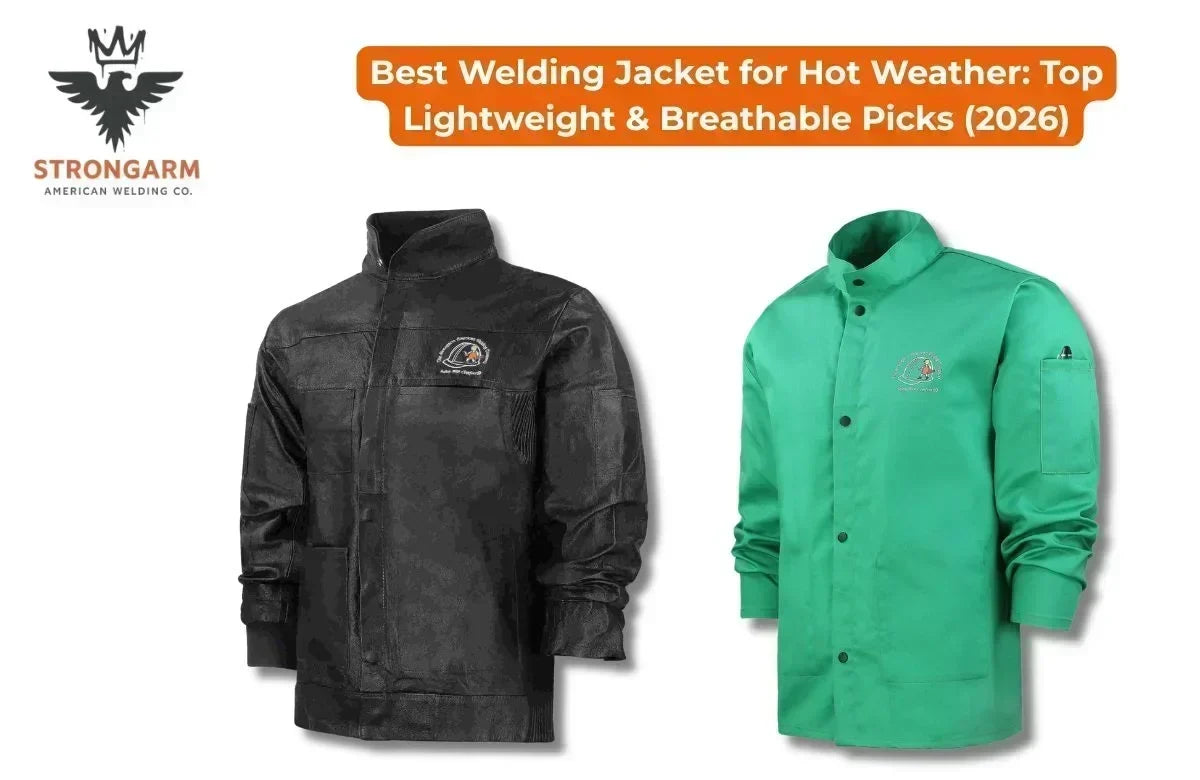
While heavy-duty welding jackets offer great protection, they often feel too heavy and restrictive during long, hot shifts. Knowing How to Choose Welding Sleeves based on material, fit, and protection allows you to stay cool and move freely without sacrificing safety against intense heat and sparks.
Why Welding Sleeves Are Non-Negotiable
Welding sleeves protect you from:
- Sparks and spatter that bounce off the workpiece and land on your arms
- UV and IR radiation emitted during the arc
- Radiant heat from the metal and the weld pool
- Accidental contact burns from touching hot surfaces
Skipping sleeves isn't just uncomfortable; it's a real safety risk. OSHA and ANSI standards strongly recommend arm protection during welding operations. Don't cut corners on this one.
Step 1 — Understand the Materials
The material of your welding sleeve determines how much heat it can handle, how long it lasts, and how comfortable it feels during an eight-hour shift. Here are the three main options you'll come across:
FR (Flame-Resistant) Cotton
FR cotton is a popular choice for welders who need solid protection without sacrificing breathability. The material is chemically treated to resist ignition, and it won't melt or drip onto your skin the way synthetic fabrics can.
It's a great fit for:
- MIG and TIG welding with moderate heat exposure
- Indoor shop environments
- Welders who run hot and need airflow
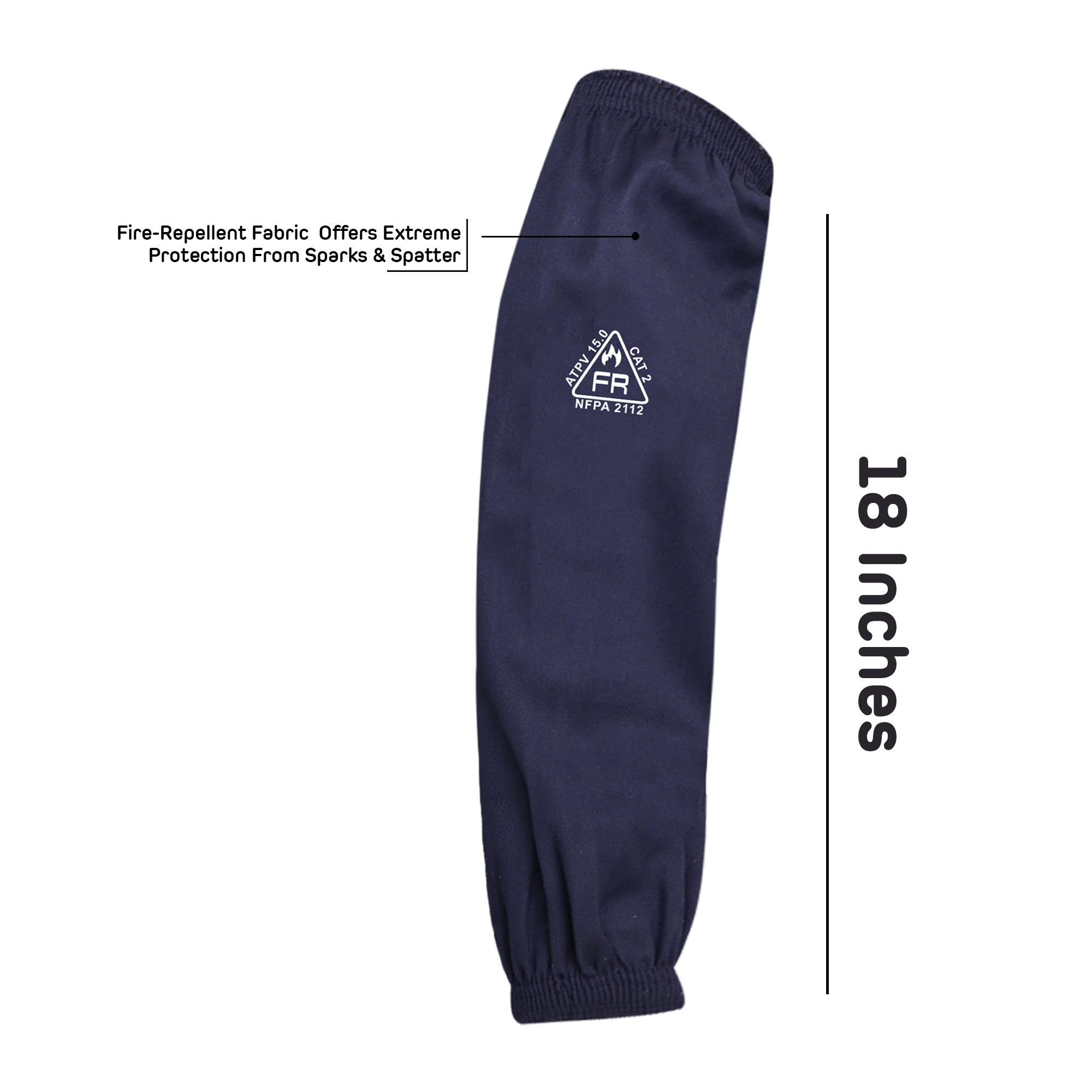
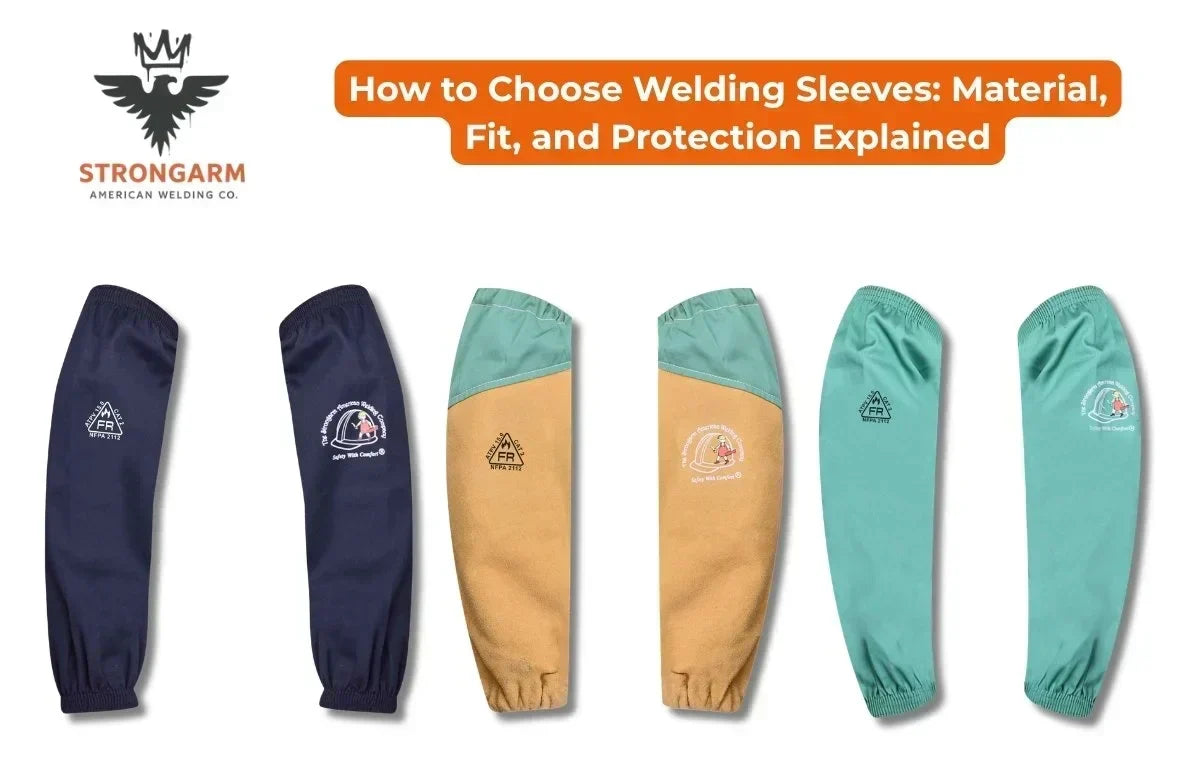
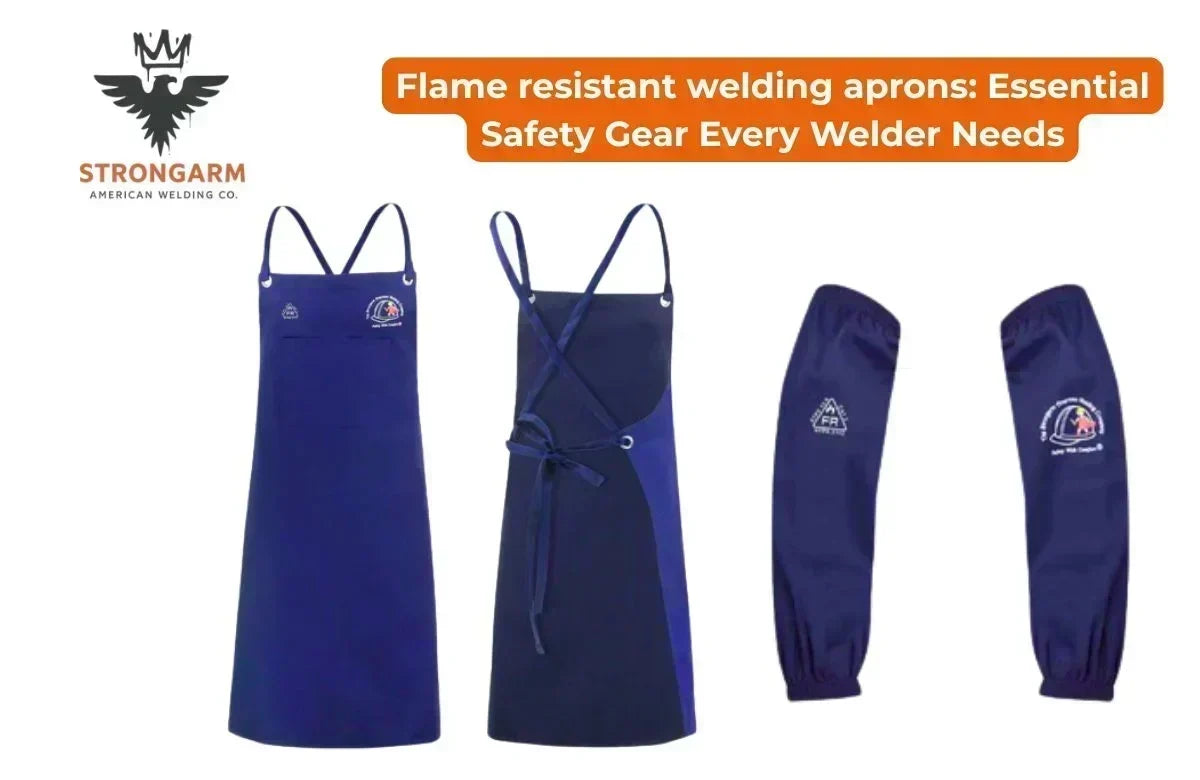
Strongarm Welding offers the Blue FR Welding Sleeves 18 Inch - Heat Resistant Cotton Arm Protection, which are built from quality FR cotton and designed to give welders dependable protection without feeling like you're wrapped in cardboard. The 18-inch length covers the full forearm and a good portion of the upper arm, exactly where you need it most.
If you prefer a slightly different fit style, the Green FR 01 Welding Sleeves 18" - Flame-Resistant Cotton from Strongarm Welding feature an open elastic design that makes them easier to slip on and off between tasks. The elastic cuff keeps things snug without cutting off circulation, a small detail that makes a big difference after a few hours.
Leather
Leather welding sleeves are the heavy hitters. They offer excellent resistance to sparks, heat, and physical abrasion. Grain leather in particular holds up extremely well in high-heat environments like stick welding or heavy MIG work.
The trade-off? Leather runs hotter and stiffer. It's not the most comfortable choice for warm shops or extended wear, but when the job demands serious protection, leather delivers.
Hybrid (Leather + FR Cotton)
Can't decide between the comfort of FR cotton and the durability of leather? You don't have to. Hybrid sleeves combine the best of both worlds.
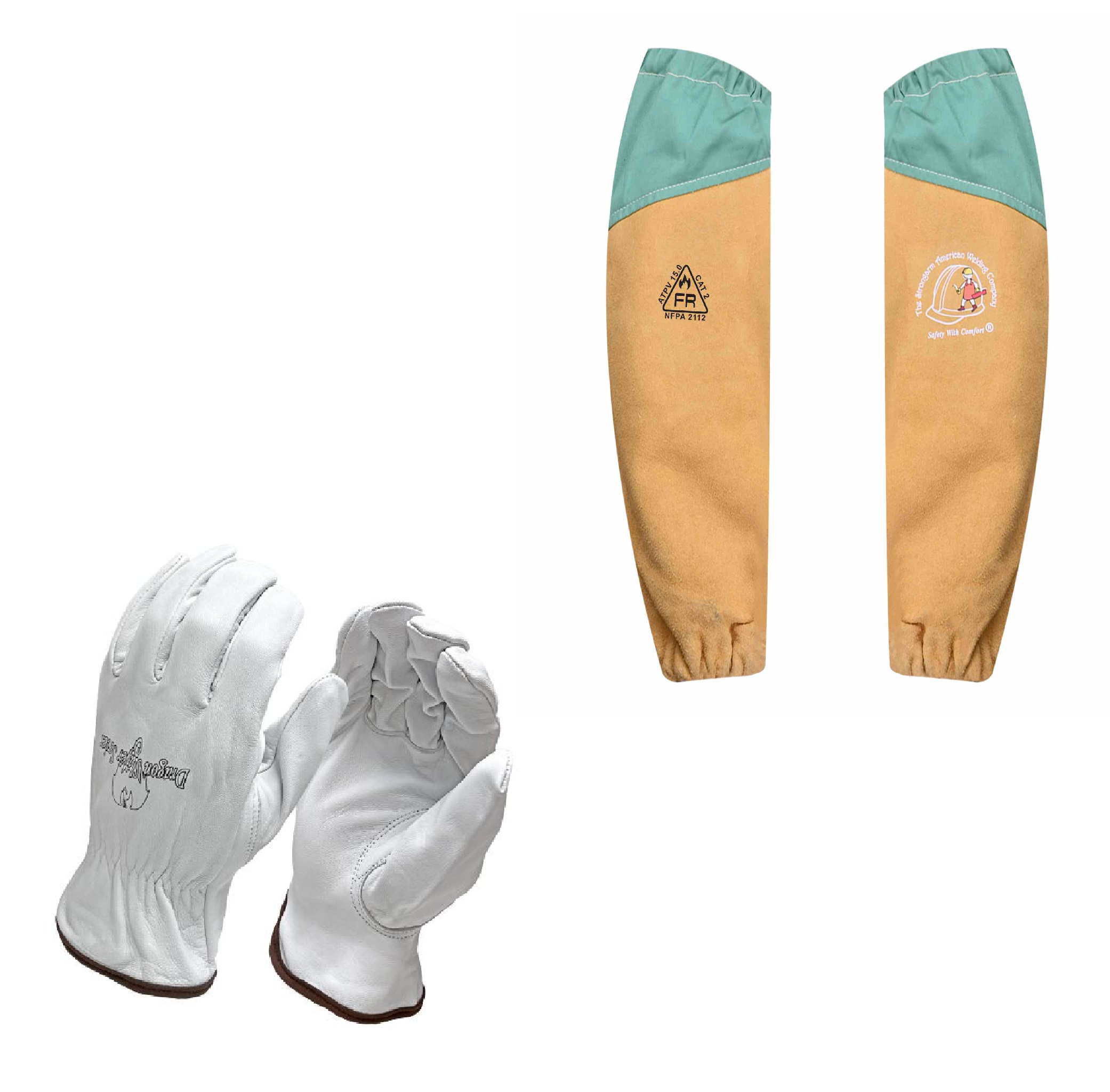
The Premium Hybrid Welding Sleeves 18 Inch - Leather & FR Cotton Arm Protection from Strongarm Welding is a standout option here. It pairs leather on the high-exposure areas with FR cotton where ventilation matters most. You get serious protection where the heat and sparks hit hardest, along with the breathability you need to stay comfortable through a long shift.
Step 2 — Get the Fit Right
A welding sleeve that slides around on your arm isn't doing its job. Fit matters just as much as material.
Here's what to look for:
-
Length: 18-inch sleeves are the industry standard and cover most of the arm effectively. Shorter sleeves leave gaps between your glove and sleeve, not ideal.
-
Elastic or hook-and-loop closures: Good sleeves stay put without pinching. Look for adjustable closures that hold the sleeve in place during movement.
-
Cuff opening style: Open elastic cuffs (like on the Green FR sleeves from Strongarm Welding) make it easy to pull sleeves on or off quickly, which matters when you're rotating between tasks.
-
Wrist coverage: Make sure the sleeve overlaps with your glove. Gaps at the wrist are where most burns actually happen.
If you're between sizes, size up slightly. You want full coverage and free arm movement, not something that restricts your range of motion while you're working a tricky angle.
Step 3 — Match the Sleeve to Your Welding Process
Not every sleeve is right for every type of welding. Here's a quick breakdown:
| Welding Process |
Recommended Material |
| TIG Welding |
FR Cotton (precision work, lower spatter) |
| MIG Welding |
FR Cotton or Hybrid |
| Stick Welding |
Leather or Hybrid (heavy spatter, high heat) |
| Flux-Core |
Hybrid or Leather |
| Plasma Cutting |
FR Cotton or Hybrid |
If you do multiple types of welding, a hybrid sleeve like the Strongarm Premium Hybrid is your most versatile option. It handles a wide range of conditions without requiring you to swap gear between jobs. If you want to learn more about Premium Leather Welding Sleeves, you can visit this page to explore detailed information, features, and protection benefits designed for professional welders.
Step 4 — Look for These Quality Indicators
Before you buy, check for these signs of a well-made welding sleeve:
-
Certified FR material: Not all "fire-resistant" fabrics are equal. Look for properly treated FR cotton that meets NFPA 2112 or similar standards.
-
Reinforced stitching: Seams take stress. Weak stitching unravels quickly in a hot, active work environment.
-
Consistent coverage: Hold the sleeve up to light. You shouldn't see thin spots or uneven material.
-
Comfortable inner lining: Direct contact with the skin matters. Rough or scratchy inner surfaces become a serious irritation after a few hours.
Strongarm Welding builds their sleeves with these factors in mind, which is why they've become a trusted name among welders across the U.S.
Step 5 — Consider How Long You'll Wear Them
Comfort over time is something a lot of welders overlook when they shop for sleeves. A sleeve might feel fine for the first 20 minutes, but after four or five hours on the job, stiff or heavy material starts to wear you down fast.
Ask yourself these questions before you buy:
-
How long is your average shift? If you weld for 6–8 hours straight, breathability and weight become critical factors. FR cotton or a hybrid sleeve will serve you much better than a full leather option in that scenario.
-
Do you work in a hot shop or outdoors in summer? Heat buildup inside the sleeve leads to fatigue and sweat, which reduces your grip and focus. Choose lighter, more breathable materials if your environment already runs warm.
-
Do you take your sleeves on and off frequently? If you're constantly moving between welding and other tasks, easy-on/easy-off design matters. Open elastic cuffs and smooth inner linings make that much less of a hassle.
-
Do you have sensitive skin? Rough inner surfaces or poorly finished seams can cause irritation or chafing after extended wear. Always check the inside of the sleeve before committing to a purchase.
The bottom line, don't just think about protection in isolation. Think about protection across the full length of your workday. For maximum safety from head to toe, consider upgrading to a full Professional Welding Protective Gear Set to complete your workshop armor.
Step 6 — Know When to Replace Your Sleeves
Even the best welding sleeves don't last forever. Using worn-out sleeves is one of the most common, and most preventable, safety mistakes welders make. The sleeve looks fine from a distance, but the protection has degraded, and you don't find out until something goes wrong.
Here are the signs it's time to replace your welding sleeves:
-
Thinning or worn-through fabric: If you can see light through the material or feel it getting thinner in spots, the protective barrier is failing. Replace immediately.
-
Fraying seams or unravelling stitching: Once the stitching goes, the sleeve starts to fall apart under heat and stress. A split seam mid-weld is a serious hazard.
-
Burn holes or scorch marks: Small holes from past sparks might seem minor, but they create direct exposure points. A sleeve with multiple burn-throughs has done its job and needs to be retired.
-
Loss of elasticity in the cuff: If the sleeve no longer holds its position and keeps sliding down your arm, it's not protecting you the way it should. Poor fit equals poor coverage.
-
Stiffness or cracking in leather sections: Leather that has dried out and cracked loses its ability to handle heat and flexes poorly. A cracked leather sleeve offers a fraction of its original protection.
Make it a habit to inspect your sleeves at the start of every week. Catching wear early costs you nothing. Ignoring it can cost you a lot more. Looking for the essentials? Explore our full Basic Welding Equipment List to complete your workshop safety setup.
Common Mistakes to Avoid
Even experienced welders make these missteps when choosing sleeves:
-
Going too short: If your sleeve doesn't reach close to your shoulder, you're leaving a burn-risk zone uncovered.
-
Choosing synthetic materials: Polyester and nylon melt under heat. Never wear synthetic sleeves in a welding environment.
-
Ignoring the closure: A sleeve that constantly slips down is a distraction and a hazard. Always check how it fastens.
-
Buying based on price alone: Cheap sleeves wear out fast and may not offer genuine FR protection. Invest in quality gear that lasts.
Customer Reviews
"Texas summers make full welding jackets unbearable. I switched to the FR cotton sleeves from Strongarm Welding, and they completely saved my workdays."
— Garrett Hayes, Houston, Texas
"I do a lot of heavy overhead stick welding, and standard cotton sleeves just don’t cut it. The premium hybrid sleeves from Strongarm Welding put the leather exactly where I need it on my forearms, and the flexible upper cotton lets me move effortlessly."
— Shane Miller, Pittsburgh, Pennsylvania
"Most sleeves I’ve used constantly slide down my arms, which is incredibly frustrating and unsafe. Strongarm Welding uses excellent elastic bands that hold the sleeves securely in place for my entire ten-hour shift."
— Wyatt Cooper, Denver, Colorado
"I dropped hot slag right onto my arm yesterday, and these sleeves stopped it completely without burning through. You can immediately feel the quality of the fabric."
— Austin Brody, Chicago, Illinois
"Precision TIG welding requires smooth, unhindered movement. These 18-inch green sleeves give me total arm protection without adding bulky weight or stiffness."
— Cody Jenkins, Savannah, Georgia
People Also Asked (PAA)
1. How do I choose the right length for welding sleeves?
Most standard professional welding sleeves measure 18 inches in length. This size comfortably covers your entire arm from your wrist up past your elbow to your mid-bicep, preventing any dangerous skin exposure between your welding gloves and your shirt.
2. Can I wash flame-resistant (FR) cotton welding sleeves?
Yes, you can wash high-quality FR cotton welding sleeves, but you must follow the manufacturer's care instructions closely. Premium brands treat the cotton to retain its flame-retardant properties for dozens of wash cycles.
3. When should I choose leather welding sleeves over FR cotton?
Choose heavy-duty cowhide leather sleeves if you perform heavy stick welding, plasma cutting, or out-of-position overhead fabrication. Leather provides unmatched protection against heavy molten slag and sharp metal edges.
4. What is the benefit of using hybrid welding sleeves?
Hybrid welding sleeves offer the perfect balance of comfort and heavy-duty protection. They feature rugged split-cowhide leather on the forearms where your arms rest on hot metal surfaces and breathable FR cotton on the upper arm to keep you cool and flexible.
5. How do I prevent my welding sleeves from slipping down during a shift?
Look for welding sleeves engineered with heavy-duty elastic bands or adjustable hook-and-loop straps at both ends. These secure closures grip your wrist and bicep firmly, keeping your protective gear locked in place even when working overhead.
Final Thoughts
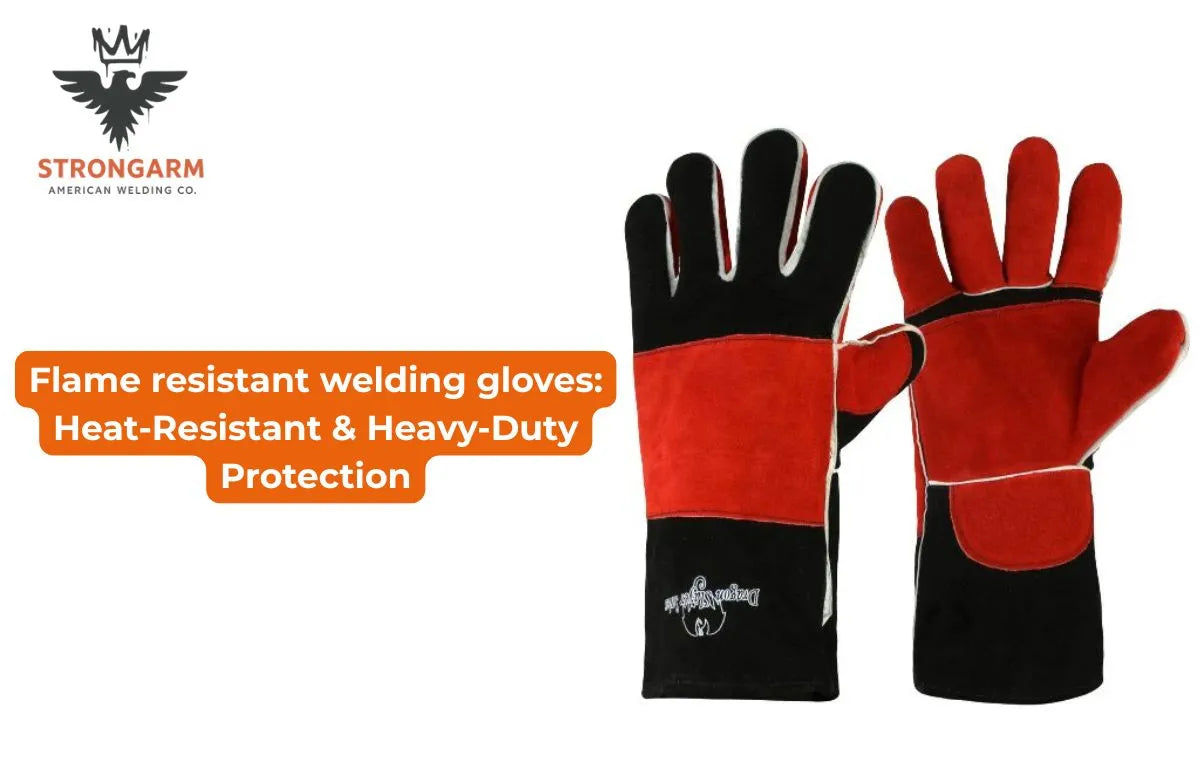
Knowing how to choose welding sleeves comes down to three things: material, fit, and matching the sleeve to your specific welding environment. FR cotton gives you breathability, leather gives you toughness, and hybrid sleeves give you both. Strongarm Welding covers all three categories with well-designed, purpose-built options, from their FR cotton sleeves in both blue and green to their premium hybrid design. For detailed tips on selecting the right protective gear for your projects, feel free to visit our page to explore How to Choose Welding Gloves.
Ready to Choose the Right Welding Sleeves for Your Work?
Understanding How to Choose Welding Sleeves can make a major difference in your daily welding safety and comfort. At Strongarm Welding, Our goal is simple: help you choose welding sleeves that match your work conditions, not just your budget.
Get Expert Help from Strongarm Welding
We make it easy for you to choose the right protection without confusion. Our team guides you step-by-step so you can pick the best sleeves for your welding tasks.
- Call Us Directly: Dial 1 678-691-2332 and talk to a welding safety expert who understands sleeve materials, heat resistance, and job-specific protection needs.
- Get Online Support: Visit our Contact Us Page for quick help with sizing, product comparisons, and order assistance.
Stay Connected with Strongarm Welding
Follow Strongarm Welding to stay updated on new sleeve releases, safety tips, and professional welding gear insights:
Make the smart choice today by learning How to Choose Welding Sleeves with Strongarm Welding, so every job you take on stays safe, comfortable, and fully protected.
About the Author
The Strongarm Welding Team consists of experienced metal fabricators, safety gear engineers, and industrial tradespeople dedicated to protecting your craft. We design, test, and manufacture premium personal protective equipment (PPE) that delivers maximum heat resistance, durable comfort, and uncompromising safety for workshops across the United States.