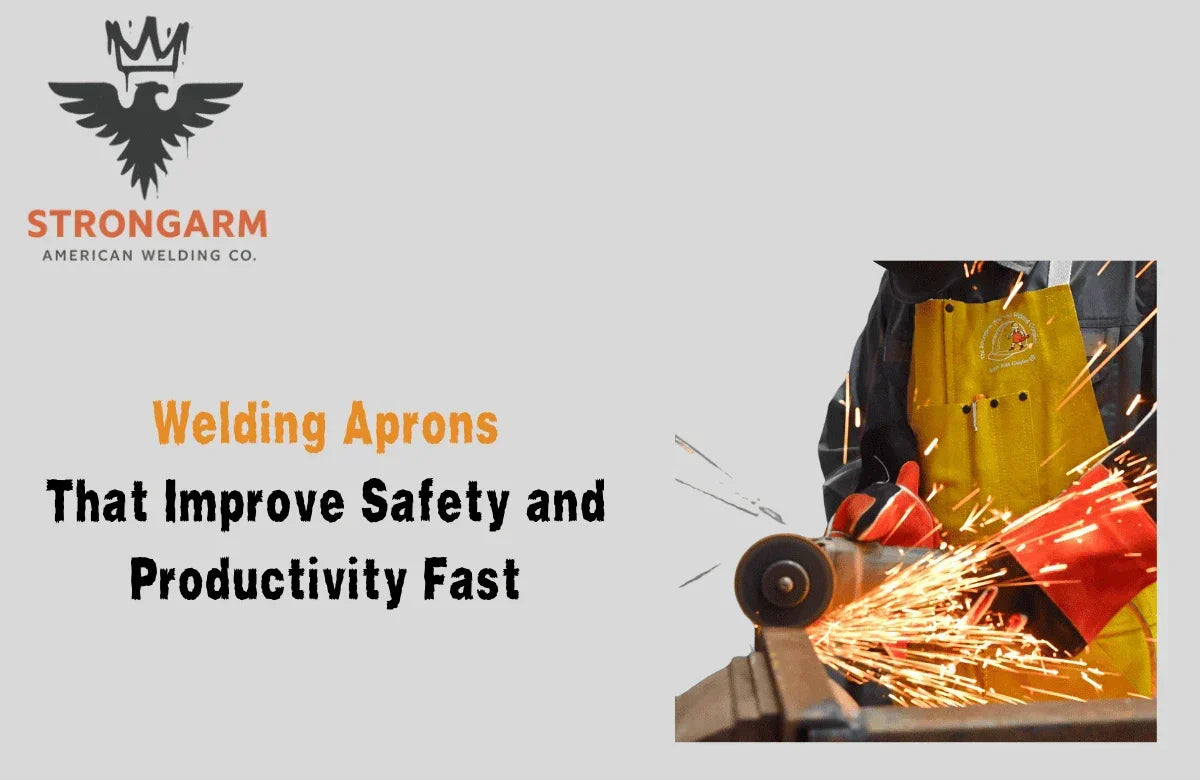
Choosing the right welding aprons is one of the fastest ways to improve jobsite safety, reduce injuries, and increase productivity. Welding environments expose workers to sparks, molten metal, radiant heat, and sharp debris every day. Without proper torso protection, even minor exposure can lead to burns, damaged clothing, and lost work time.
At Strong Arm Welding, we design welding aprons that professionals trust in real-world conditions. Backed by field experience, proven materials, and customer feedback, our aprons help welders stay protected, comfortable, and focused on the task at hand.
This guide explains how welding aprons work, why material choice matters, and how to select the right apron for your welding application, so you can protect your team and keep productivity moving forward.
Why Welding Aprons Are Essential for Workplace Safety
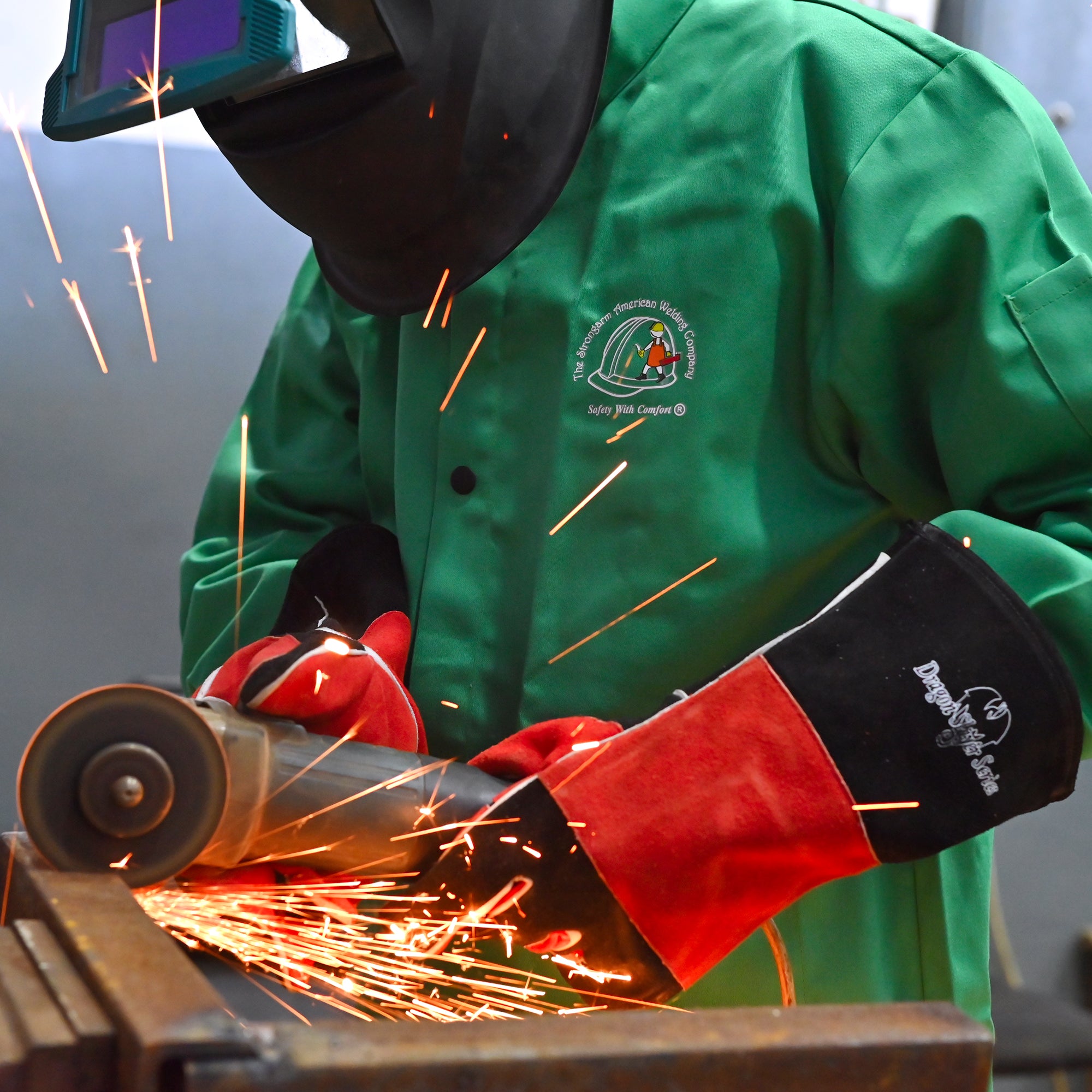
Welding aprons act as the first line of defense against common welding hazards. While gloves protect hands and sleeves protect arms, the torso remains one of the most exposed areas during welding and fabrication.
High-quality welding aprons help:
- Block sparks and molten metal
- Reduce burn injuries
- Protect clothing from heat damage
- Improve worker confidence and focus
As a result, welding aprons play a critical role in meeting safety expectations while supporting efficient workflows.
How Welding Aprons Improve Productivity
Safety and productivity go hand in hand. When welders feel protected, they work with greater confidence and fewer interruptions.
Productivity Benefits of Welding Aprons
- Fewer burn-related injuries and delays
- Less time changing damaged clothing
- Improved focus during precision welds
- Higher PPE compliance on the jobsite
Therefore, investing in reliable welding aprons reduces downtime while improving output quality.
What Makes a High-Performance Welding Apron?
Not all welding aprons offer the same level of protection. Performance depends on materials, coverage, and fit.
1. Material Strength and Heat Resistance
The most effective welding aprons use:
- Split cowhide leather
- Flame-resistant (FR) treated fabrics
- Reinforced seams and stitching
These materials resist sparks, spatter, and radiant heat during continuous use.
2. Proper Coverage and Length
Apron length directly impacts protection:
- Short aprons allow greater mobility
- Longer aprons protect the lap and thighs
- Full-length designs reduce exposure when seated
Selecting the right length ensures protection without limiting movement.
3. Comfort and Adjustability
Comfort drives compliance. Adjustable straps, balanced weight distribution, and ergonomic designs allow welders to wear aprons throughout long shifts without discomfort.
Leather Welding Aprons: Built for Heavy-Duty Protection
Leather welding aprons remain the industry standard for high-heat and high-spark environments.
Why Leather Welding Aprons Perform Better
- Naturally flame resistant
- Withstand molten metal contact
- Resist abrasion and tearing
- Deliver long service life
Strong Arm Welding leather aprons are designed for demanding industrial use, not occasional tasks.
Featured Welding Aprons from Strong Arm Welding
Basic OG-2 Leather Apron 42"
The Basic OG-2 Leather Apron 42" delivers extended coverage for heavy welding applications.
Key benefits:
- Full-length protection
- Durable cowhide leather
- Ideal for overhead or seated welding
This apron is widely used in fabrication shops and industrial welding environments where exposure risks are high.
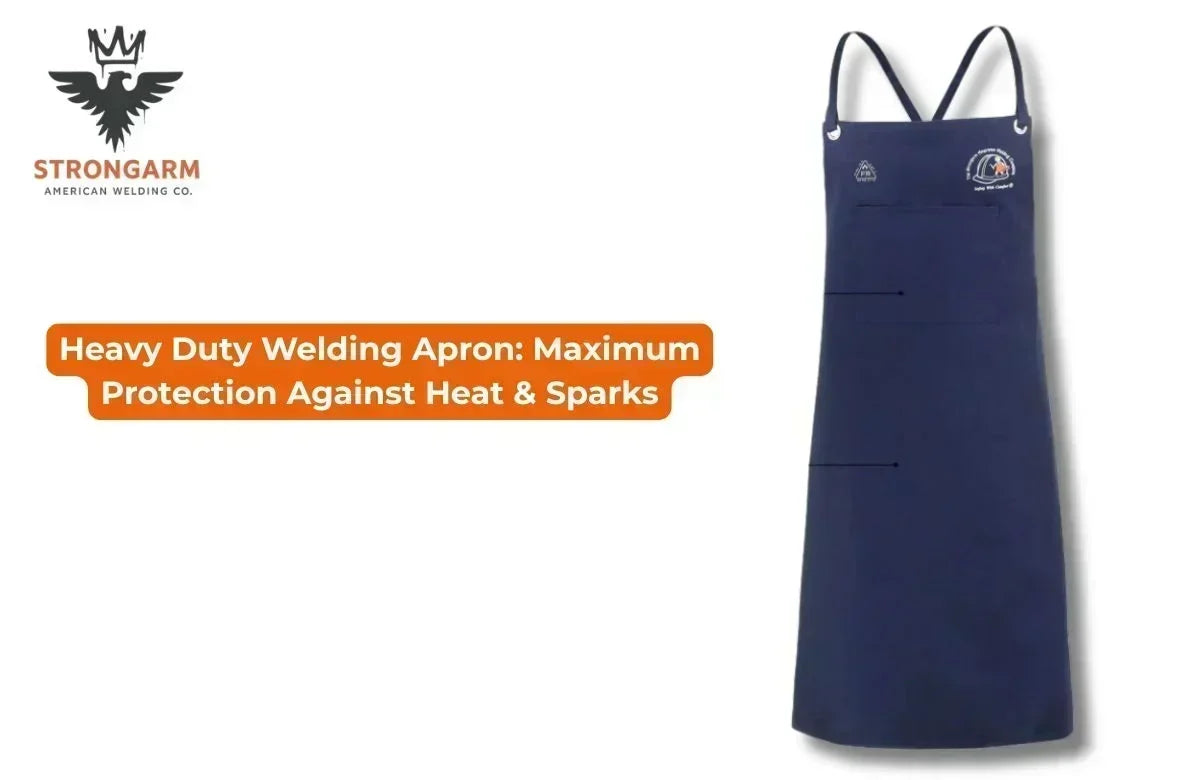
X-Tech BF-1 FR Blue Welding Apron 36”
The X-Tech BF-1 FR Blue Welding Apron 36” offers a balance between protection and mobility.
Features include:
- Flame-resistant fabric construction
- Lightweight and flexible design
- Excellent spark and heat resistance
It works well for MIG, TIG, and light fabrication tasks where movement is critical.
Basic 101 Leather Apron Multi-Pockets
The Basic 101 Leather Apron Multi-Pockets adds convenience to protection.
Advantages:
- Integrated tool pockets
- Durable leather build
- Easy access to essential tools
This apron supports efficiency by reducing unnecessary movement during welding tasks.
Welding Aprons vs Other Welding PPE
Understanding how welding aprons fit into a complete PPE system helps buyers make informed decisions.
Welding Aprons vs Welding Jackets
- Aprons protect the torso and lap
- Jackets provide full upper-body coverage
- Many professionals combine both for layered protection
Welding aprons remain essential even when jackets or sleeves are used.
People Also Ask
1. What are welding aprons used for?
Welding aprons protect the torso and lap from sparks, molten metal, and heat during welding and fabrication work.
2. Are leather welding aprons better than fabric ones?
Leather welding aprons offer superior protection in high-heat and high-spark environments.
3. How long should a welding apron last?
A well-maintained leather welding apron can last several years under regular use.
4. Do welding aprons replace welding jackets?
No. Aprons complement jackets or sleeves and are often used together for layered protection.
Choosing the Right Welding Apron for Your Job
To select the right welding apron, consider:
- Welding method (MIG, TIG, stick, plasma)
- Exposure level to sparks and heat
- Required coverage length
- Need for tool pockets
- Comfort for extended wear
Strong Arm Welding helps professionals match apron designs to real-world job demands.
Common Mistakes When Buying Welding Aprons
Avoid these frequent issues:
- Choosing fabric aprons for heavy spark work
- Ignoring length and coverage needs
- Overlooking comfort and adjustability
- Buying low-cost aprons that fail early
High-quality welding aprons deliver better protection and lower long-term costs.
Welding Aprons and Modern Safety Standards
Workplace safety standards continue to evolve. Welding aprons must align with updated fire resistance and PPE expectations to reduce liability and injury risk.
For deeper insights, read:
👉 Professional Welding Safety Gear & Protection by Strong Arm Welding
This guide explains how proper protective gear supports compliance with upcoming safety requirements.
Why Professionals Trust Strong Arm Welding
Strong Arm Welding builds trust through:
- Proven field-tested designs
- Reliable material sourcing
- Transparent product specifications
- Long-standing relationships with welders
Our welding aprons are designed based on real jobsite feedback, not assumptions. Best Welding aprons are a must-have in any welder's toolkit to shield your body from sparks, heat, and flying debris. Our comprehensive guide covers everything from material types to fit and care tips that'll keep you protected on the job.
What Customers Say About Strong Arm Welding Aprons
The OG-2 apron offers unbeatable protection during heavy welding.
— Fabrication Shop Manager
Comfortable, durable, and reliable for daily use.
— Certified Welder
The pocketed apron saves time and keeps tools within reach.
— Maintenance Supervisor
Frequently Asked Questions
Which welding apron is best for heavy-duty work?
The Basic OG-2 Leather Apron 42" offers extended coverage and durability.
Are FR fabric aprons safe for welding?
Yes, for light to moderate welding tasks with lower spark exposure.
Do welding aprons include pockets?
Yes. The Basic 101 Leather Apron Multi-Pockets includes built-in storage.
How should welding aprons be maintained?
Clean debris regularly, avoid soaking leather, and store in a dry area.
Final Thoughts: Invest in Welding Aprons That Work as Hard as You Do
The right welding aprons protect workers, prevent injuries, and support productivity. When materials, coverage, and comfort align, welders can focus on quality results without unnecessary risk.
Strong Arm Welding delivers welding aprons trusted by professionals who demand real protection because safety should never slow you down.
Find the Right Welding Apron for Your Next Job
Every welding job comes with its own set of hazards, sparks, spatter, heat, and sharp edges. A well-built Welding Apron gives you a reliable layer of protection exactly where you need it most, keeping your body shielded while your hands stay free to work. At Strongarm Welding, we design aprons built for real welders doing real work across the USA.
Talk to Our Team Before You Order
Our welding safety experts are ready to help you pick the right apron based on your actual work environment:
-
Call Us Directly: Dial 1 678-691-2332 and speak with a specialist who knows protective welding gear inside and out.
-
Reach Us Online: Visit our Contact Us Page for quick help with sizing, material selection, and order support.
Stay Connected with Strongarm Welding
Follow us for product updates, welding safety tips, and new gear releases made for working conditions like yours:
From light-duty tasks to high-heat environments, the right Welding Apron keeps you protected, comfortable, and fully focused on the job. Strongarm Welding delivers gear you can trust every single shift.
Author Bio
Strong Arm Welding Team
The Strong Arm Welding team brings hands-on experience in welding safety equipment, PPE solutions, and industrial fabrication environments. Our experts collaborate with welders and safety professionals to deliver protective gear designed for real-world welding challenges.