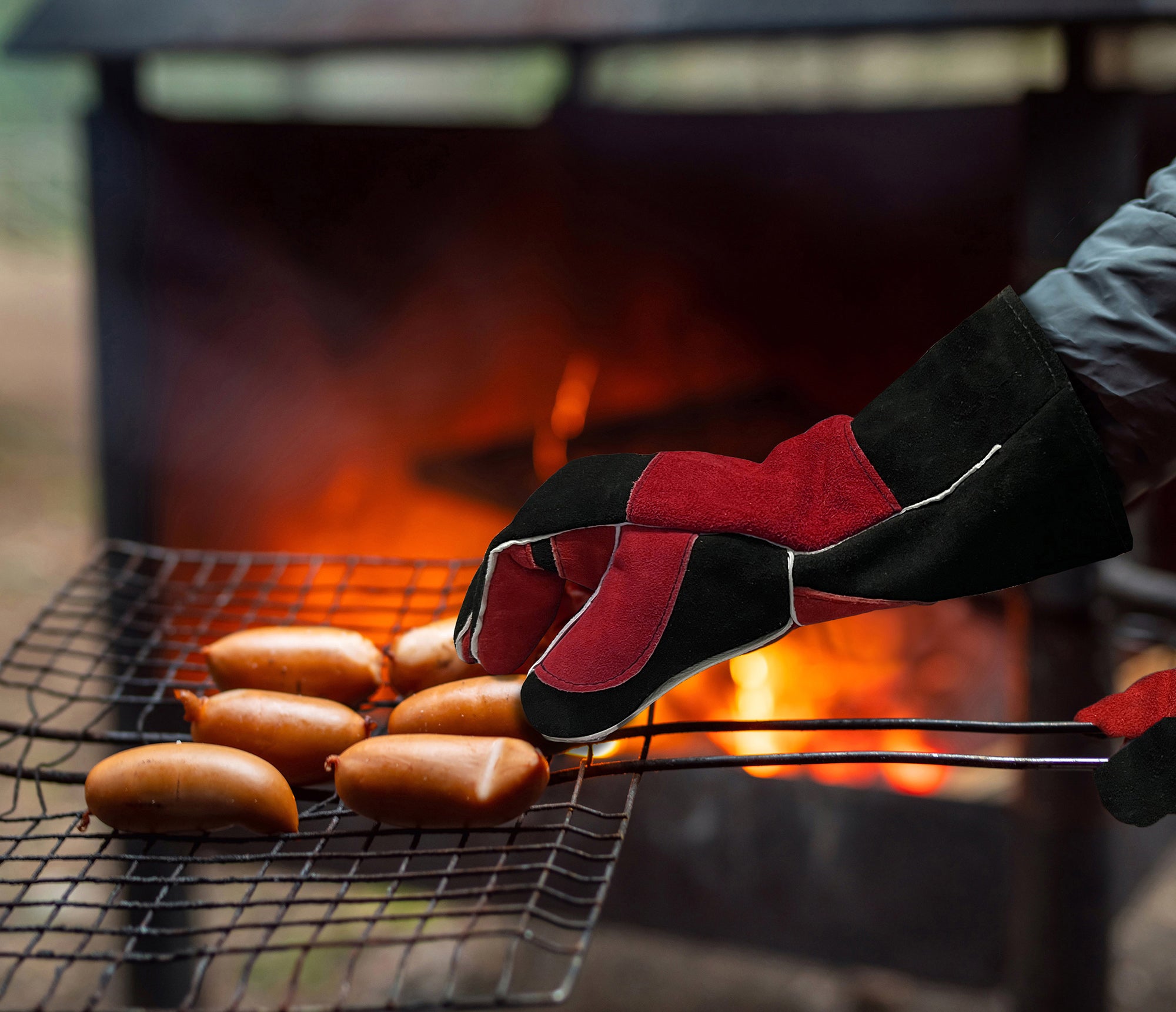
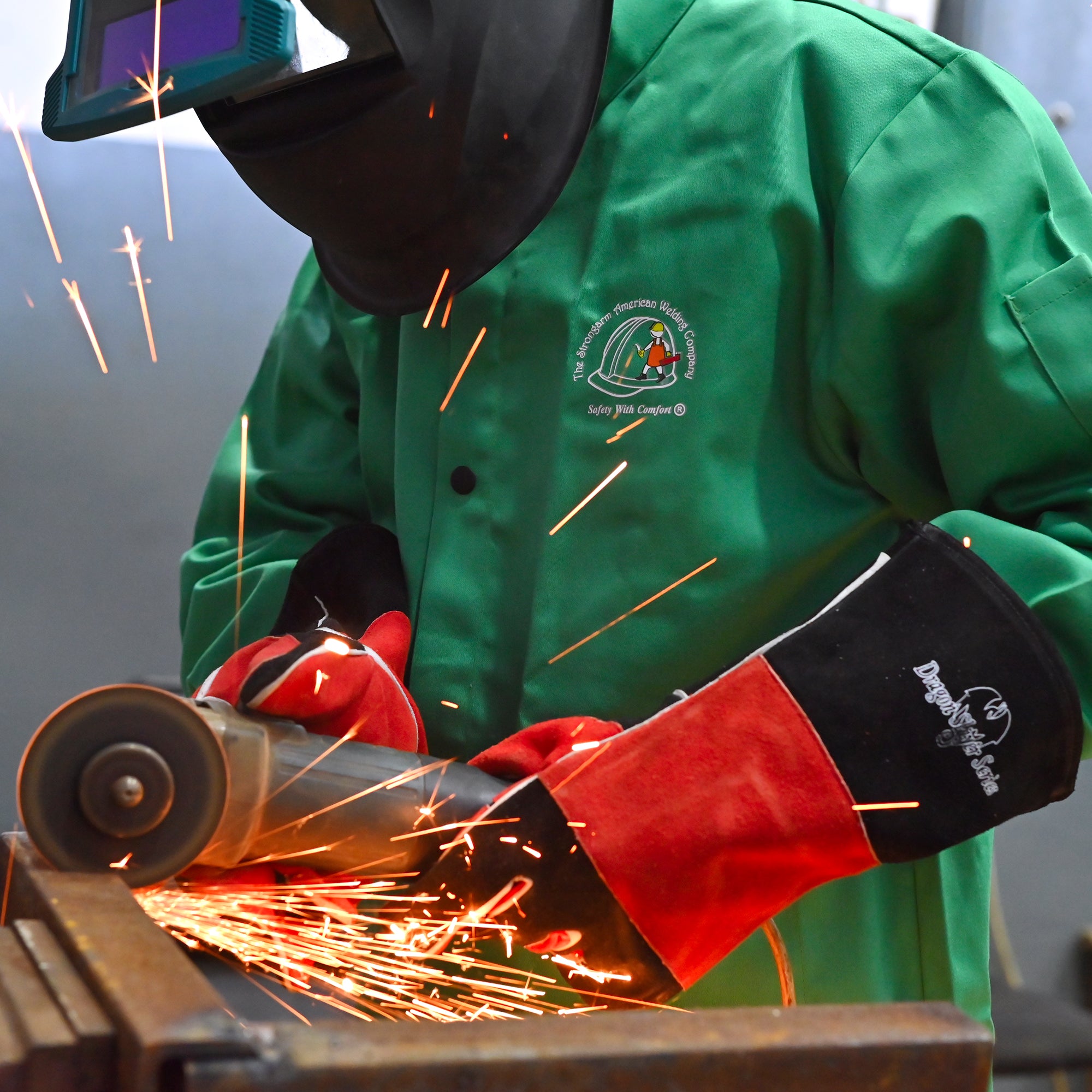
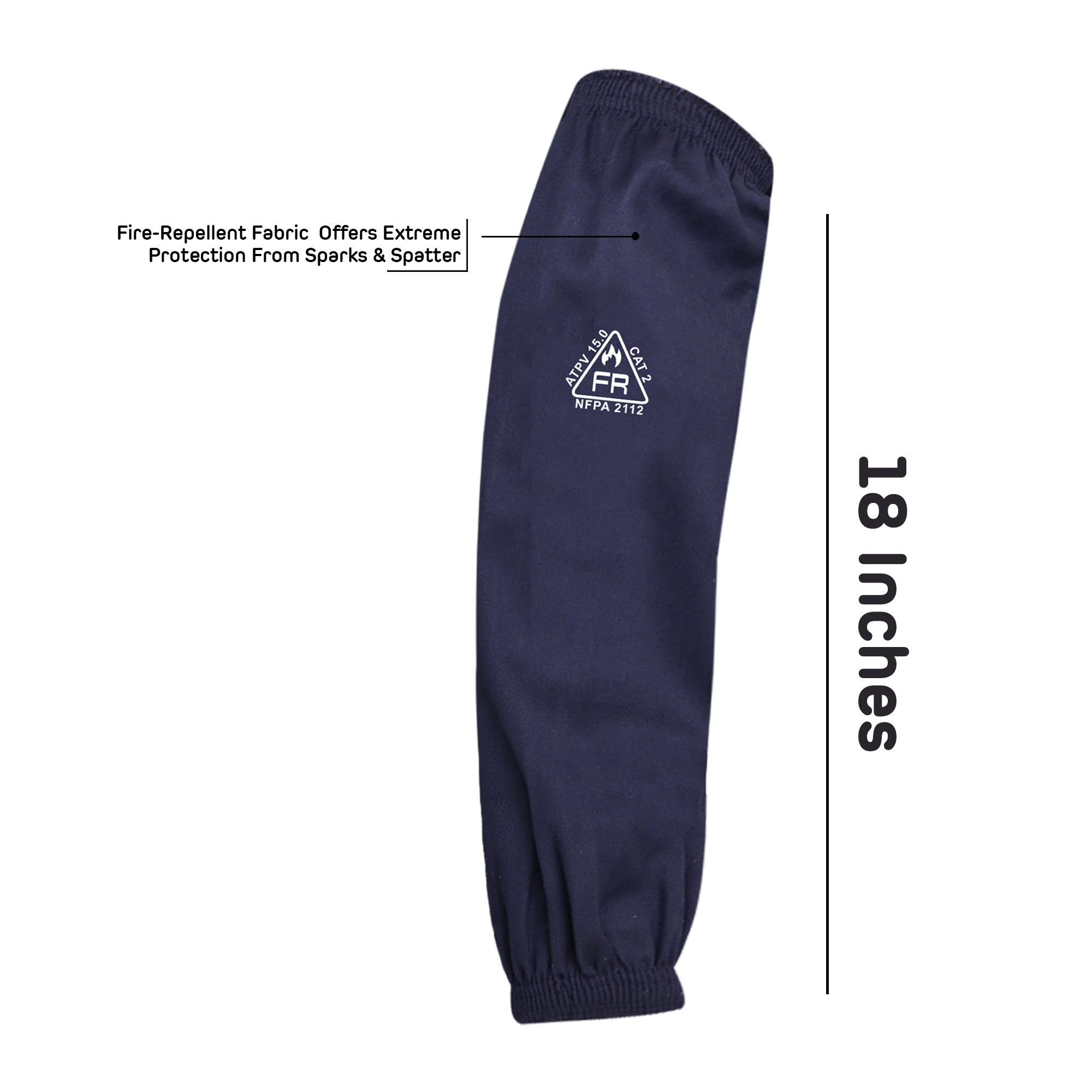
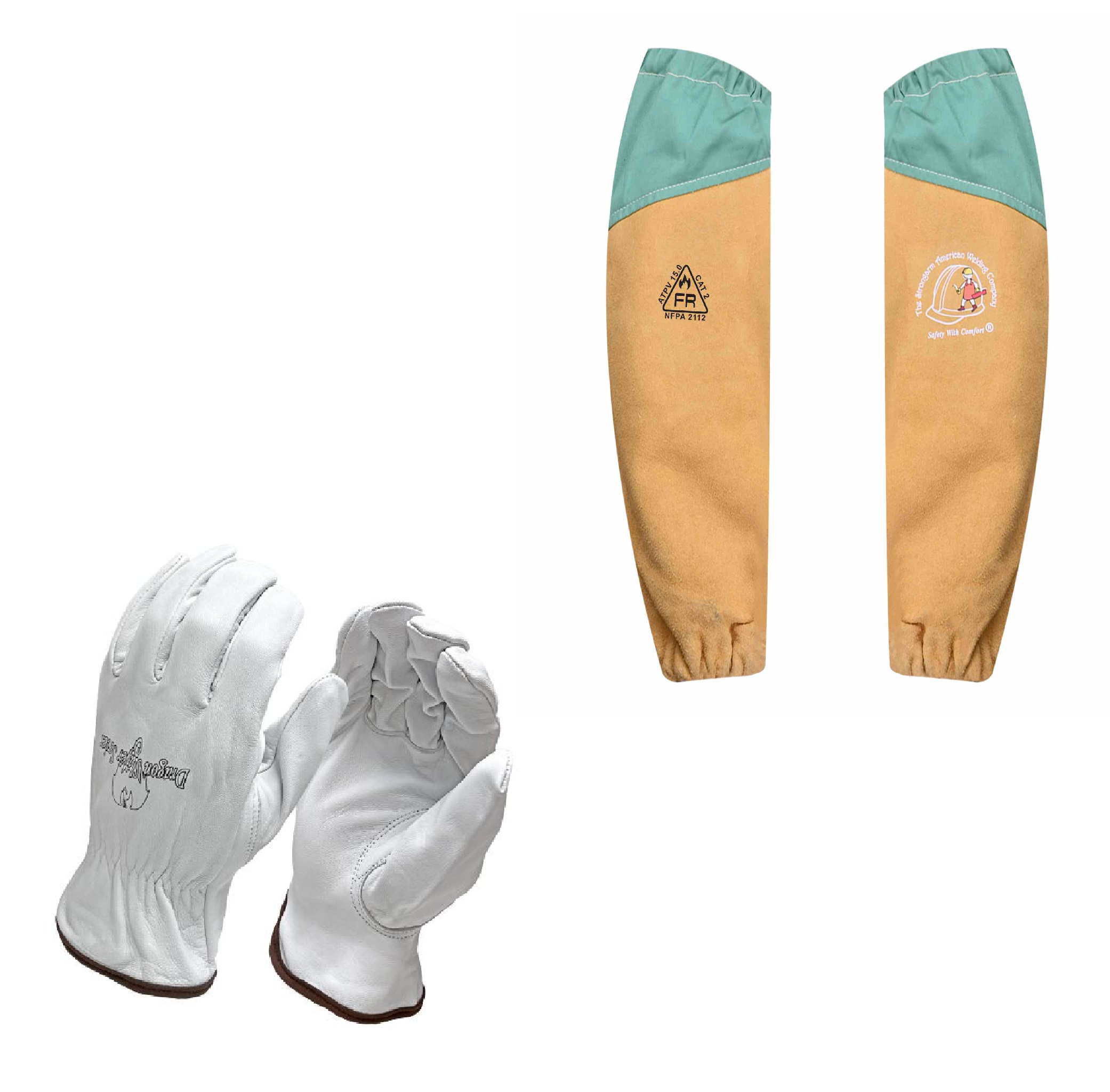
Welding is an art defined by precision, skill, and intense energy. Whether you are striking an arc in a heavy industrial shop, executing structural metal fabrications, or tackling custom projects on the weekends, you work mere inches away from open flames, flying sparks, high thermal energy, and molten spatter.
In an environment where extreme heat is a constant companion, proper personal protective equipment (PPE) is your absolute first line of defense. While helmets, gloves, and boots get a lot of attention, your upper body and lap remain vulnerable to constant spark shower impacts. That is why flame resistant welding aprons are essential safety gear every welder needs before striking their next arc.
The Hidden Hazards of the Welding Environment
Every time an electrode touches metal, it creates potential hazards that can compromise your physical safety within seconds, which is why wearing heavy-duty leather welding aprons becomes critical for full-body protection.
-
Extreme Thermal Heat: Welding arcs can reach temperatures upwards of several thousand degrees Fahrenheit, radiating intense heat directly onto your torso.
-
Flying Sparks and Slag: Hot bits of metal fly in all directions during cutting, grinding, and welding operations, easily catching onto standard fabrics.
-
Molten Spatter: Droplets of liquid metal can instantly burn through non-rated clothing, causing severe third-degree burns to the body.
-
Synthetic Fabric Risks: Standard work clothing made of synthetic materials like polyester or nylon will melt directly onto the skin when hit with a hot spark, compounding injury risks significantly.
A high-performance apron acts as a tough heat shield, stopping sparks and thermal radiation cold before they can reach your body or underlying clothes.
Why Quality Flame Resistance Matters
Not all protective garments are created equal. True flame-resistant materials are specially engineered to resist ignition, prevent the spread of flames, and self-extinguish as soon as the heat source is removed. When you wear a dedicated welding apron, you buy yourself critical reaction time. Instead of catching fire or melting against your body, high-grade aprons block intense radiant heat, allowing you to focus on line accuracy and puddle control without worrying about your clothing igniting. Looking to upgrade your full protective setup? Check out our complete Welding Safety Equipment Kit page to find the perfect gear for your shop.
Key Features to Look for in a Welding Apron
Choosing the right apron comes down to finding the perfect balance between uncompromising safety and practical usability. Here are the core factors to evaluate when selecting your apron:
-
Material Composition: Heavy-duty split cowhide leather and high-ounce treated FR cotton are the gold standards for spark and heat protection.
-
Stitching and Construction: Look for stress-point reinforcement and heat-resistant Kevlar thread to prevent seam separation under thermal stress.
-
Coverage Area: Ensure the apron extends from the top chest down past the knees to cover your lap while sitting or bending over workpieces.
-
Ergonomic Harness Systems: Cross-back strap designs distribute weight across the shoulders and upper back, preventing neck strain during long shop shifts.
-
Quick-Release Hardware: Durable metal or heavy-duty plastic buckles allow for fast removal in case of emergency.
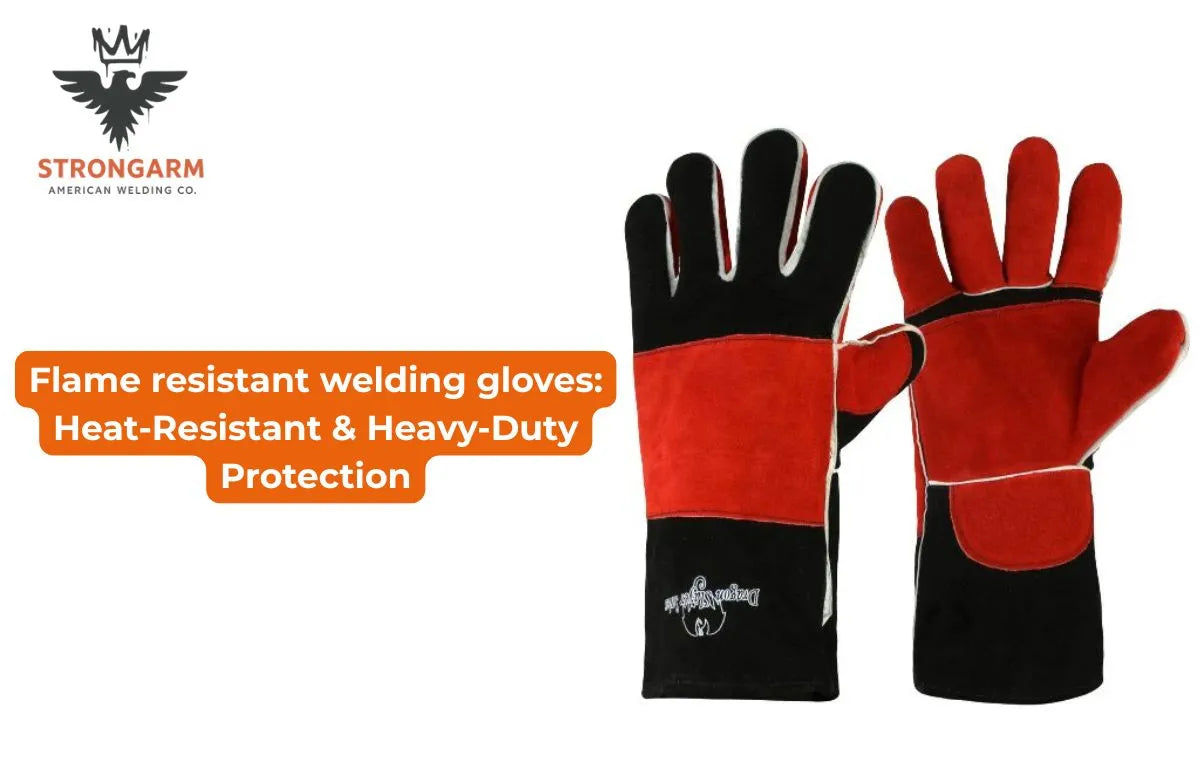
- Looking for total body protection? Read our full breakdown of Destroyer Welding Gloves to find the right hand gear for your shop setup.
Top Recommendation: Strongarm Welding
When it comes to unyielding build quality, structural durability, and rider-grade heat protection, Strongarm Welding sets the industry standard for professional fabricators and metalworkers across the USA. Built to handle the brutal realities of daily shop abuse, their gear keeps working welders safe, comfortable, and protected from high-heat exposure.
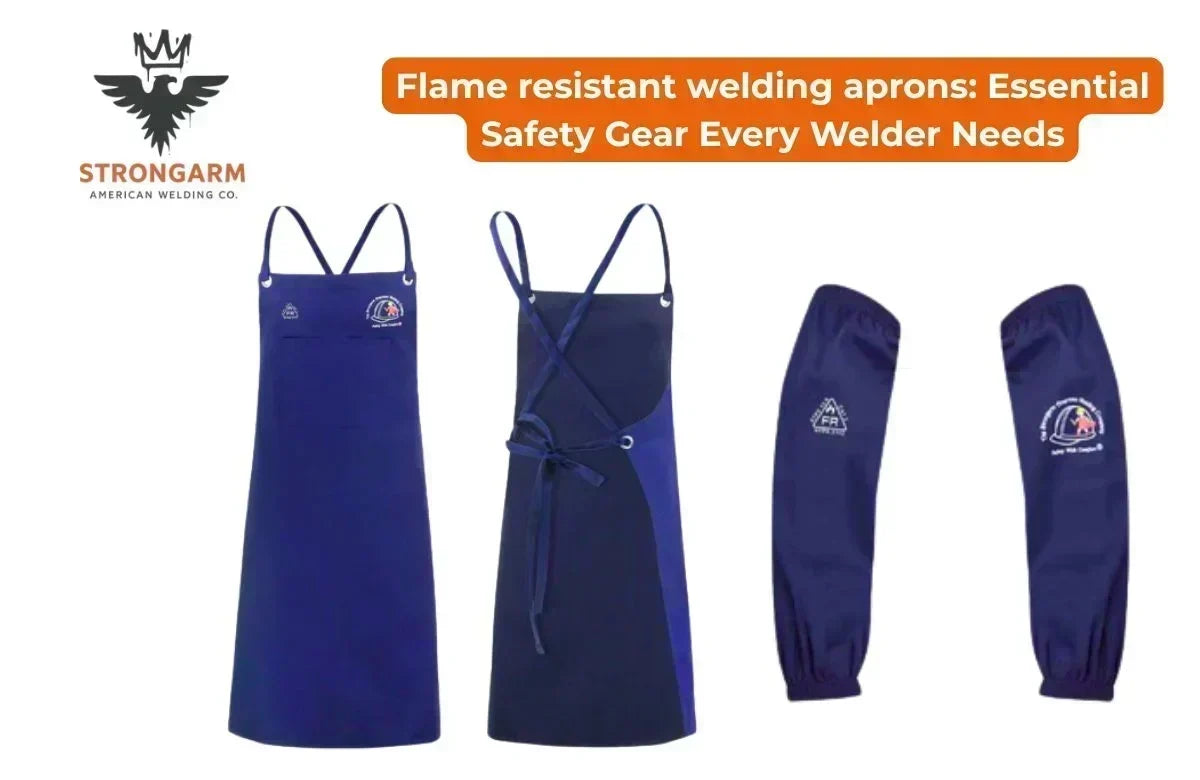
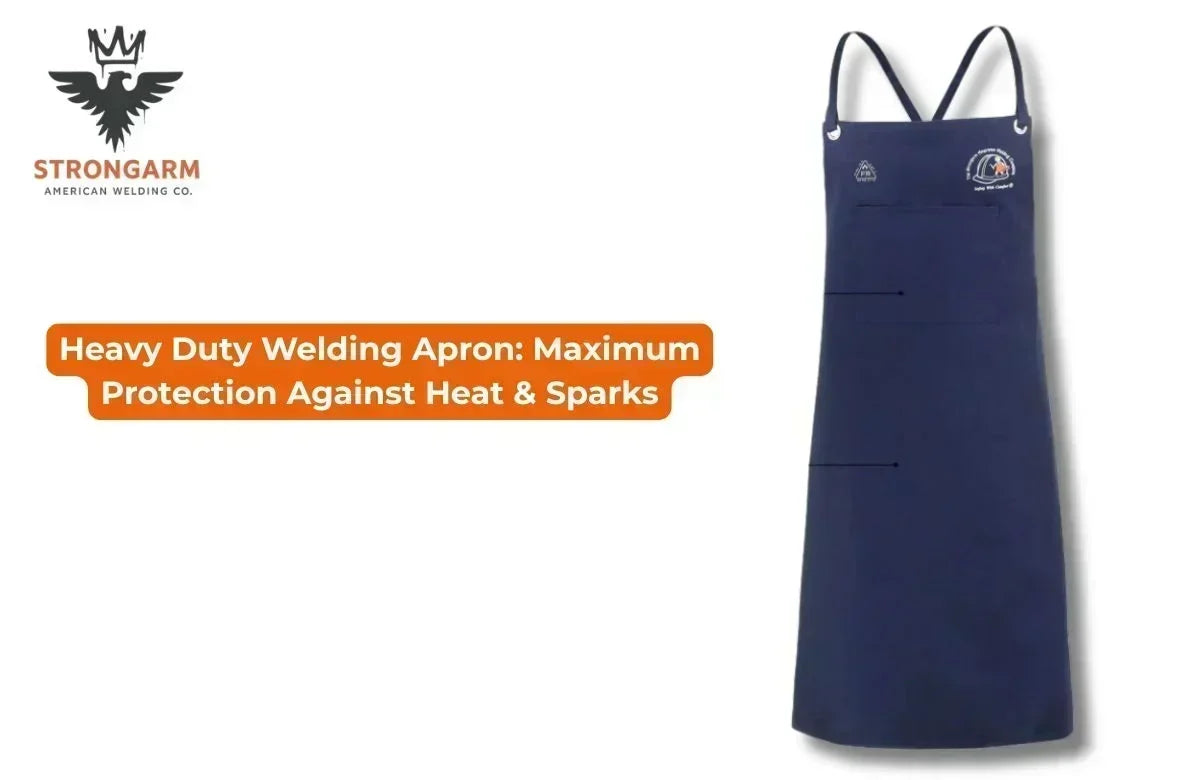
If you are looking for an optimal combination of lightweight comfort, unrestricted movement, and robust spark shielding, consider adding the X-Tech BF-1 FR Cotton Blue Welding Apron 36" - Flame Resistant Work Apron to your PPE setup. Built with premium flame-retardant fabric, it offers heavy-duty protection without adding the bulk or weight of traditional thick leather garments, making it an ideal choice for warm environments and intricate shop work.
Leather vs. FR Cotton: Which Material Fits Your Shop?
Choosing between split leather and flame-resistant cotton depends largely on the specific welding processes you run throughout the day:
| Feature |
Split Cowhide Leather |
Treated FR Cotton |
| Best For |
Heavy-duty Stick, MIG, Heavy Overhead Welding |
TIG Welding, Grinding, Light Assembly Work |
| Heat Resistance |
Maximum thermal barrier against heavy spatter |
Moderate heat shield against sparks and UV light |
| Weight & Comfort |
Heavier build, highly abrasion resistant |
Breathable, lightweight, highly flexible |
| Mobility |
Requires break-in time for maximum flex |
Soft and flexible right out of the package |
How to Care for Your Flame-Resistant Apron
Investing in high-quality gear from trusted suppliers like Strongarm Welding only pays off if you maintain your equipment properly. Follow these simple upkeep practices to extend the life of your safety gear:
-
Inspect Before Every Shift: Check for torn seams, damaged straps, thinned material, or heavy oil contamination that could reduce flame resistance.
-
Keep Free from Flammable Substances: Never allow grease, oil, solvents, or flammable liquids to soak into your apron fabric.
-
Store in a Dry Space: Hang your apron in a clean, dry area away from direct sunlight and moisture when not in use to prevent material degradation.
-
Follow Manufacturer Washing Directions: Wash FR cotton garments with mild detergents, avoiding fabric softeners or bleach, which can strip away flame-retardant chemical treatments.
Common Mistakes Welders Make With Apron Selection
Many welders grab whatever apron is available without thinking through actual protection. Here are mistakes to avoid:
- Don't assume all aprons rated "flame resistant" are equal. Some barely meet minimum standards. Others over-deliver on protection while still remaining comfortable. Do your research.
- Don't choose an apron based only on price. A cheap apron that catches fire on the third week costs you far more than a quality apron that lasts years.
- Don't ignore coverage gaps. An apron that's too small or poorly designed leaves vulnerable areas exposed. You need full protection from neck to knees.
- To read our detailed article on choosing the best Welding Aprons with Gloves, check out our dedicated page for expert recommendations and safety tips.
People Also Asked (PAA)
1. Are flame-resistant welding aprons washable?
Yes, you can wash FR cotton welding aprons using mild detergent and warm water. Avoid bleach and fabric softeners, as these chemicals strip away the flame-retardant treatment and weaken the protective fibers.
2. Which is better for welding, leather or FR cotton aprons?
Leather aprons provide maximum protection against heavy spatter and severe heat during Stick or MIG welding. FR cotton aprons are lighter and more breathable, making them ideal for TIG welding, grinding, and warm shop environments.
3. Do flame-resistant aprons expire over time?
Flame-resistant aprons do not have a set expiration date, but their protective qualities degrade with heavy wear, tears, and oil saturation. Inspect your apron before every shift and replace it if the material thins out or the stitching fails.
4. Can a welding apron prevent heat burns completely?
A welding apron blocks direct sparks, molten spatter, and radiant heat from reaching your skin. While it drastically reduces burn risks, you should always wear full protective clothing underneath for total body coverage.
5. How long should a welding apron be for proper protection?
A properly fitted welding apron should extend from your upper chest down past your knees. This coverage protects your chest, stomach, and lap whether you are standing at a workbench or sitting while executing precision welds.
Final Thoughts
In the world of metalworking, true craftsmanship is defined not just by the strength of your welds, but by how seriously you take your personal protection. Skimping on high-grade safety gear might seem like an easy way to move faster or stay lightweight, but it only takes a single stray spark, flying slag droplet, or sudden burst of intense radiant heat to cause severe injuries, expensive shop downtime, and long-term harm.
Your torso and body are constant targets for high-temperature hazards every time you strike an arc or pull a trigger. Equipping your workshop with heavy-duty protection, especially reliable gear like flame-resistant aprons, ensures you can take on tough fabrication jobs without compromising your wellbeing.
Speak with Strongarm Welding Product Specialists
Need assistance choosing your ideal flame resistant welding aprons or complementary protective gear? Product specialists are ready to guide you toward the right protection suited to your specific welding demands.
-
Speak with a Safety Specialist: Call 1 678-691-2332 for direct advice on sizing, material selection, and heat-resistance performance for your workshop setup.
-
Get Custom & Bulk Support: Head to the official Contact Us Page to inquire about commercial volume orders, custom team fitting, and fast nationwide USA delivery.
Follow the Strongarm Welding Community
Keep up with the latest welding safety practices, new protective gear drops, and special offers. Follow Strongarm Welding across their official social platforms:
Strongarm Welding never cuts corners on quality or safety. Every flame resistant welding apron features heat-resistant materials, reinforced stitching, and flexible fits to deliver continuous spark protection, unrestricted movement, and total durability shift after shift.
About the Author
The Strongarm Welding Team We engineer and supply high-performance welding equipment, safety gear, and industrial accessories for professional fabricators and metalworkers across the USA. Our team tests every garment in real shop environments to ensure maximum heat resistance, long-lasting durability, and ultimate operator safety on every arc.